
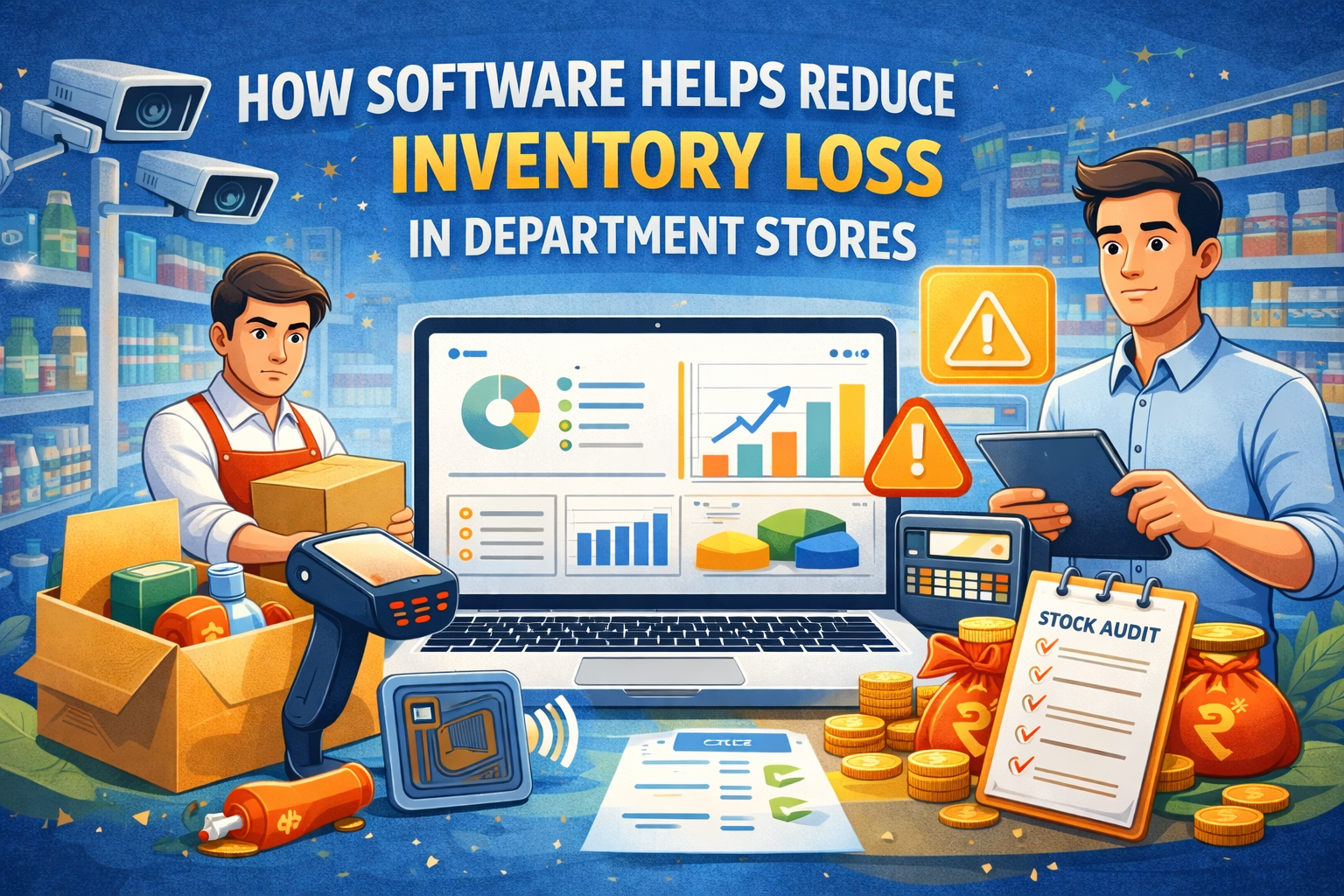
Running a department store without proper systems is a bit like trying to manage a busy highway without traffic signals; things might move, but chaos is inevitable. One of the biggest hidden problems in retail is inventory loss, often called shrinkage. It includes theft, human errors, damaged goods, and poor tracking. The good news? Modern store management software can dramatically reduce these losses and give you full control over your inventory.
Let’s break down exactly how it works.
Understanding Inventory Loss in Department Stores
Inventory loss happens when your actual stock doesn’t match what your system says you have. This gap can slowly eat into your profits without you even realizing it.
Common causes include:
- Employee theft or shoplifting
- Billing mistakes
- Manual stock entry errors
- Damaged or expired products
- Poor stock tracking
Without software, these issues often go unnoticed until it’s too late. But with the right system in place, you can catch problems early or prevent them entirely.
Real-Time Inventory Tracking Eliminates Guesswork
One of the biggest advantages of retail software is real-time inventory tracking. Every sale, return, or stock movement is instantly recorded in the system.
Instead of manually counting items at the end of the day, you always know:
- What’s in stock
- What’s running low
- What’s missing
This reduces human dependency and removes guesswork. If an item suddenly disappears from inventory without a sale, the system flags it immediately. That’s like having a digital watchdog over your stock 24/7.
Barcode & RFID Systems Reduce Human Error
Manual entry is one of the biggest reasons for inventory mismatches. A small mistake—like entering 100 units instead of 10—can create huge discrepancies.
Software integrated with:
- Barcode scanners
- RFID (Radio Frequency Identification)
ensures every product is tracked accurately. Each item is scanned during billing, stocking, and transfers, minimizing errors.
Think of it like switching from handwriting to typing: faster, cleaner, and far more accurate.
Automated Stock Audits & Alerts
Retail software can automatically perform stock audits and send alerts when something unusual happens.
For example:
- Sudden drop in stock without sales
- Items not moving for a long time
- Stock levels going below the threshold.
These alerts help you act quickly before small issues turn into big losses. Instead of reacting late, you stay one step ahead.
Prevention of Theft & Fraud
Inventory shrinkage due to theft, both internal and external, is a major concern in department stores.
Software helps reduce this by:
- Tracking employee activities
- Restricting access with user roles
- Monitoring transaction history
- Integrating with CCTV systems
If something suspicious happens, you can trace exactly who handled the product and when. This level of transparency discourages fraud and improves accountability.
Better Demand Forecasting
Overstocking and understocking both lead to losses. Unsold products may expire, while stockouts can hurt sales.
Retail software uses data to predict demand based on the following:
- Past sales trends
- Seasonal patterns
- Customer behavior
This helps you maintain the right stock levels. It’s like having a smart assistant that tells you what to stock and when.
Centralized Multi-Store Management
For department stores with multiple branches, managing inventory across locations can be a nightmare.
Software allows you to:
- Track stock across all stores
- Transfer inventory between locations
- Avoid duplication or shortages
This ensures better control and reduces losses caused by mismanagement.
Expiry & Damage Tracking
In categories like groceries, cosmetics, or pharmaceuticals, expired or damaged goods can cause significant losses.
Retail software helps by:
- Tracking expiry dates
- Sending alerts before products expire
- Recording damaged items
This allows you to take action, like running discounts, before products become unsellable.
Data-Driven Decision Making
Without data, decisions are based on assumptions. With software, you get detailed reports on:
- Fast-moving products
- Slow-moving inventory
- Loss patterns
- Profit margins
These insights help you optimize your inventory strategy and reduce waste.
Improved Supplier Management
Inventory loss isn’t always internal; it can also happen during procurement.
Software helps you:
- Track supplier deliveries
- Verify quantities received
- Maintain purchase records
This ensures you only pay for what you actually receive, reducing losses at the sourcing stage.
Cost Savings & Increased Profitability
When you reduce inventory loss, you directly increase your profit margins. Even a small reduction in shrinkage can have a big impact on your bottom line.
Retail software helps you:
- Minimize waste
- Prevent theft
- Improve efficiency
All of this adds up to better financial performance.
Conclusion
Inventory loss is one of the most silent profit killers in department stores. But with the right store management software, you can turn this challenge into an opportunity.
From real-time tracking and automated alerts to theft prevention and demand forecasting, software gives you complete control over your inventory. It replaces guesswork with data, reduces human errors, and ensures your stock is always accounted for.
If you’re serious about growing your retail business, investing in the right software isn’t optional; it’s essential.
FAQs
1. What is inventory loss in retail?
Inventory loss refers to the difference between recorded stock and actual stock due to theft, errors, or damage.
2. How does software reduce inventory shrinkage?
It tracks stock in real time, automates audits, and provides alerts for unusual activities.
3. Is barcode scanning necessary for inventory management?
Yes, it significantly reduces manual errors and improves accuracy.
4. Can small stores benefit from retail software?
Absolutely. Even small stores can reduce losses and improve efficiency with basic software.
5. What features should I look for in retail software?
Look for inventory tracking, barcode integration, reporting, alerts, and multi-store management.