What is Retail Management Software?
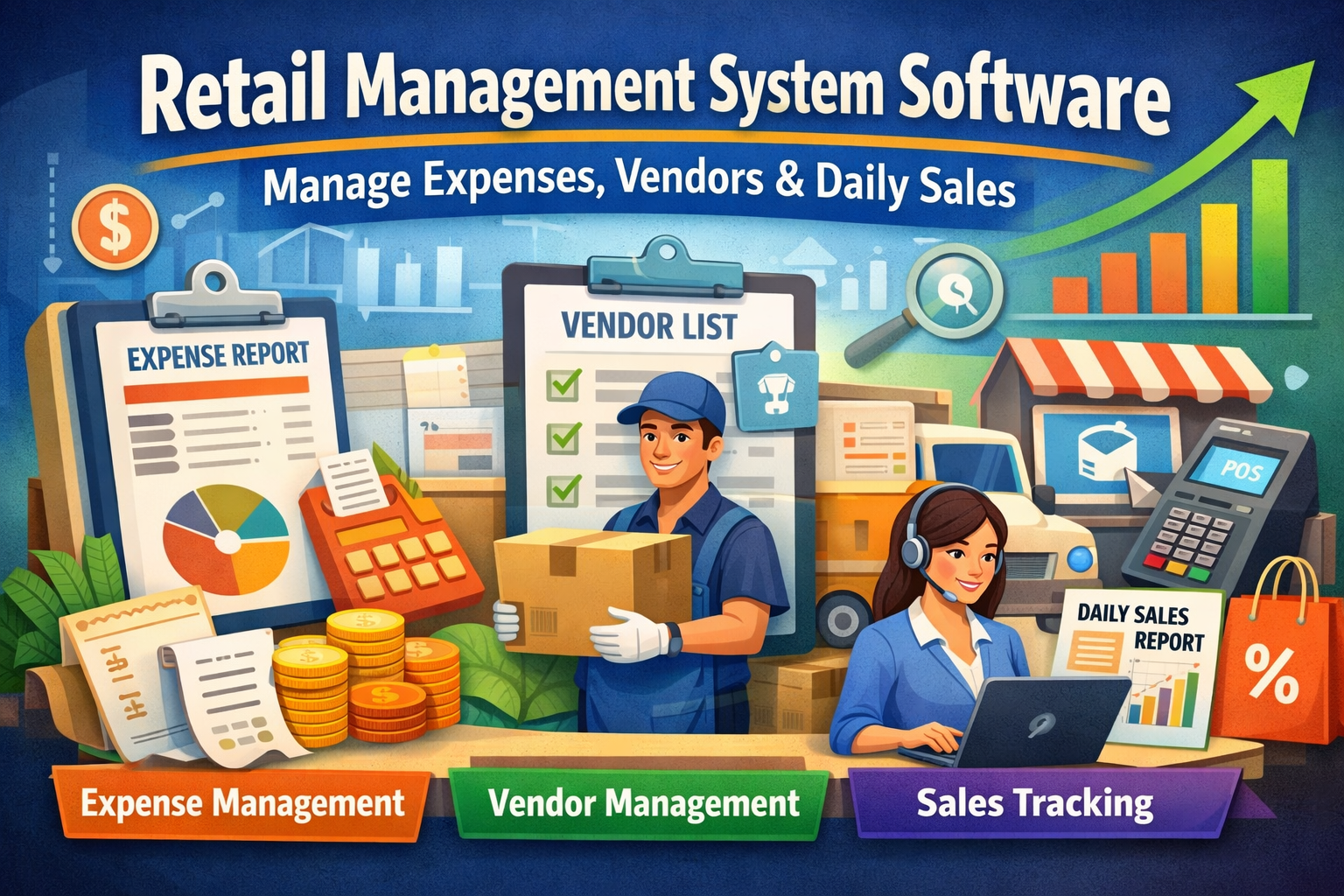
Running a retail business without a structured system is like trying to drive a car blindfolded, you might move forward, but the chances of crashing are high. A Retail Management System Software is a comprehensive digital solution designed to handle everything from billing and inventory to expenses, vendors, and daily sales tracking. It acts as the brain of your retail operation, centralizing all your business activities into one easy-to-use platform.
Think of it as your virtual manager who never sleeps. Whether you own a small grocery shop, a pharmacy, or a multi-location retail chain, this software helps you keep track of your finances, supplier relationships, and sales performance without drowning in paperwork. Instead of juggling Excel sheets, notebooks, and invoices, everything is stored securely in one place.
What makes modern retail systems powerful is their ability to automate repetitive tasks. You don’t need to manually calculate daily profits or track pending vendor payments; the system does it for you. It also minimizes human errors, which can otherwise cost businesses thousands. With increasing competition in retail, having such a system is no longer optional; it’s a necessity.
Why Retail Businesses Need It Today
Let’s be real; retail today is not what it was five or ten years ago. Customers expect faster service, accurate billing, and seamless experiences. At the same time, business owners need tighter control over expenses and better visibility into their profits. Without a proper system, it becomes nearly impossible to keep up.
A retail management system software helps bridge this gap by providing real-time insights into business performance. Imagine knowing exactly how much you spent today, how much you sold, and which vendor payments are pending, all at a glance. Sounds powerful, right? That’s exactly what this software delivers.
Another major factor is scalability. As your business grows, managing operations manually becomes chaotic. Software ensures that your systems grow with you. Whether you add new products, vendors, or even open new stores, everything stays organized and manageable.
In a world driven by data, decisions based on guesswork simply don’t work anymore. Retail software empowers you with accurate data, helping you make smarter, faster decisions that directly impact your profitability.

Key Components of Retail Management Systems
Expense Management Module
Managing expenses is one of the most overlooked yet critical aspects of running a retail business. From rent and electricity bills to employee salaries and miscellaneous costs, expenses can quickly spiral out of control if not tracked properly. This is where the expense management module comes into play.
This module allows you to record every expense with proper categorization. You can tag expenses as fixed or variable, daily or monthly, and even assign them to specific departments or store locations. Over time, this data helps you identify patterns—like which areas are draining your budget the most.
What makes it even more effective is automation. Instead of manually entering data every day, many systems allow you to set recurring expenses. For example, your monthly rent or internet bill can be automatically recorded. This not only saves time but also ensures that nothing gets missed.
With detailed expense reports, you can easily compare your spending against your revenue. This helps you maintain a healthy profit margin and avoid unnecessary financial leaks.
Vendor Management Module
Vendors are the backbone of any retail business. Without reliable suppliers, your shelves would be empty, and your customers would walk away. Managing vendors manually can be messy; missed payments, lost invoices, and poor communication can damage relationships.
A vendor management module simplifies all of this by keeping a centralized record of all your suppliers. You can store details like contact information, purchase history, payment terms, and outstanding balances. Everything is just a click away.
One of the biggest advantages is payment tracking. You’ll always know which vendor payments are due and when. This helps you avoid late fees and maintain a good reputation with your suppliers. Some systems even send automatic reminders, ensuring you never miss a deadline.
Additionally, you can evaluate vendor performance based on factors like delivery time, product quality, and pricing. This allows you to make informed decisions about which vendors to continue working with and which ones to replace.
Daily Sales Tracking Module
Sales are the heartbeat of your retail business. Without proper tracking, you’re essentially operating in the dark. The daily sales tracking module gives you a clear, real-time view of your revenue.
This feature records every transaction made throughout the day, providing detailed insights into what’s selling and what’s not. You can track sales by product, category, or even by staff performance. This level of detail helps you optimize your inventory and marketing strategies.
Another powerful aspect is integration with POS (Point of Sale) systems. Every time a sale is made, the data is automatically updated in your system. No manual entry, no delays. This ensures that your records are always accurate and up to date.
At the end of the day, you can generate reports that show total sales, profits, and even peak selling hours. This information is invaluable for planning promotions, managing stock, and improving overall efficiency.
Benefits of Using Retail Management Software
Improved Financial Control
Financial control is the backbone of any successful retail business, and without it, even high sales numbers can lead to losses. Retail management system software gives you complete visibility over your finances, allowing you to monitor income and expenses in real time. Instead of waiting until the end of the month to analyze your performance, you can make adjustments instantly.
When you have all your financial data in one place, it becomes easier to spot irregularities. For example, if your expenses suddenly spike, you can quickly investigate and take corrective action. This proactive approach prevents small issues from turning into major problems.
Another advantage is accuracy. Manual bookkeeping is prone to errors, which can lead to incorrect financial statements. With automated calculations, you eliminate these risks. The software ensures that every transaction is recorded correctly, giving you reliable data to base your decisions on.
Ultimately, better financial control leads to better profitability. When you know exactly where your money is going, you can cut unnecessary costs and focus on areas that generate the most revenue.
Better Vendor Relationships
Strong vendor relationships are essential for smooth business operations. When you manage vendors effectively, you ensure a consistent supply of products, better pricing, and even priority service during high-demand periods. A retail management system helps you build and maintain these relationships effortlessly.
By keeping track of payment schedules and outstanding balances, you avoid delays that could strain your relationships. Vendors appreciate timely payments, and this can often lead to better deals or discounts. It’s a win-win situation.
Additionally, having a detailed record of your interactions with vendors helps you communicate more effectively. You can quickly access past orders, resolve disputes, and negotiate better terms based on your purchase history.
Over time, this level of organization builds trust and reliability, making your business a preferred client for suppliers.
Real-Time Insights into Sales
Imagine being able to check your store’s performance at any moment, from anywhere. That’s the power of real-time sales insights. With a retail management system, you don’t have to wait for end-of-day reports; you can monitor your sales as they happen.
This allows you to make quick decisions. If a particular product is selling fast, you can reorder it immediately. If sales are slow, you can launch a promotion to boost them. This agility gives you a competitive edge in the market.
Real-time data also helps you understand customer behavior. You can identify trends, such as peak shopping hours or popular product categories. This information is invaluable for optimizing your store layout, staffing, and marketing strategies.
Features to Look for in Retail Software
Automation Capabilities
Automation is the secret sauce that makes retail software truly powerful. From generating invoices to updating inventory levels, automated processes save time and reduce human error. You can focus on growing your business instead of getting stuck in repetitive tasks.
Cloud-Based Access
Cloud-based systems allow you to access your business data from anywhere, whether you’re at your store, at home, or traveling. This flexibility ensures that you’re always in control, no matter where you are.
Reporting and Analytics
Detailed reports and analytics help you understand your business performance at a deeper level. You can analyze sales trends, expense patterns, and vendor performance to make informed decisions.
Custom Dashboards
Custom dashboards give you a personalized view of your business metrics. You can choose what data to display, making it easier to focus on what matters most.
How Retail Software Helps Manage Expenses
Expense Tracking and Categorization
Tracking expenses manually can feel like trying to catch water with your hands—inefficient and frustrating. Retail software solves this by categorizing every expense automatically. You can see exactly where your money is going, whether it’s operational costs, marketing, or utilities.
Budget Planning and Forecasting
With historical data, you can create accurate budgets and forecasts. This helps you plan for future expenses and avoid financial surprises.
Vendor Management Simplified
Vendor Records and Payment Tracking
Having all vendor information in one place makes management easy. You can track payments, manage invoices, and ensure timely transactions.
Performance Monitoring
Evaluating vendor performance helps you choose the best suppliers. You can analyze factors like delivery speed and product quality.
Managing Daily Sales Efficiently
Real-Time Sales Monitoring
Real-time tracking ensures that you always know how your business is performing. This helps you make quick, informed decisions.
Integration with POS Systems
POS integration ensures seamless data flow, eliminating manual entry and reducing errors.
Choosing the Right Retail Management System
Factors to Consider Before Buying

Choosing the right system depends on your business needs. Always opt for software that offers scalability and flexibility.
Conclusion
A Retail Management System Software is not just a tool—it’s a game-changer for modern businesses. It simplifies complex processes, improves efficiency, and gives you complete control over your operations. From managing expenses and vendors to tracking daily sales, it covers every aspect of your retail business.
When you have the right system in place, you can focus on what truly matters—growing your business and serving your customers better. The future of retail is digital, and embracing technology is the key to staying ahead in a competitive market.
FAQs
1. What is the main purpose of retail management software?
It helps businesses manage operations like expenses, vendors, inventory, and sales efficiently.
2. Can small businesses use retail management systems?
Yes, many systems are designed specifically for small and medium-sized businesses.
3. Is cloud-based retail software better?
Yes, it offers flexibility and remote access, making it highly convenient.
4. How does it help in vendor management?
It tracks vendor details, payments, and performance, improving relationships.
5. Does it integrate with POS systems?
Most modern retail systems offer seamless POS integration.