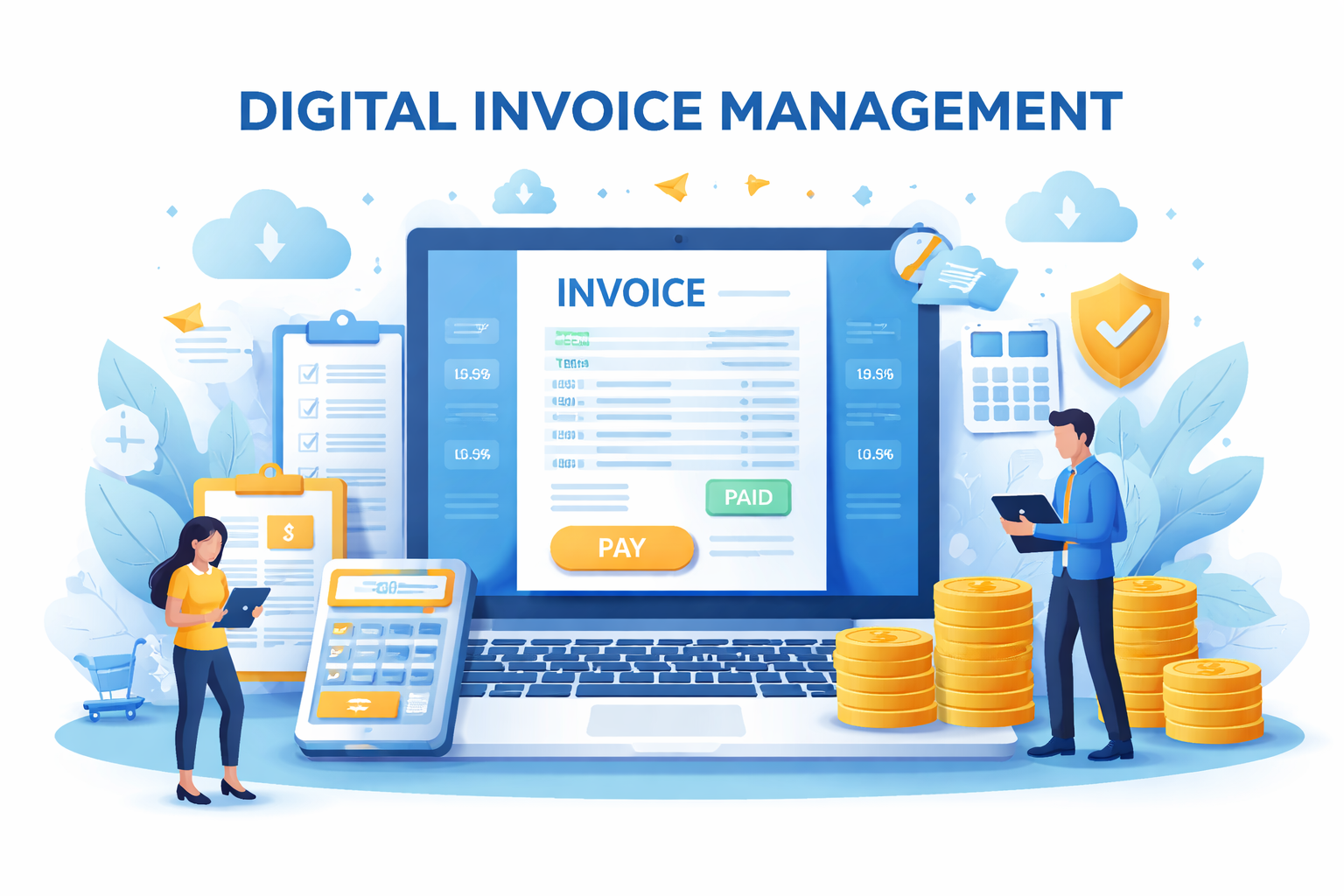
What is Digital Invoice Management?
Digital Invoice Management is the process of creating, sending, tracking, and storing invoices electronically instead of using paper-based systems. It replaces manual bookkeeping with automated workflows that help businesses manage financial transactions efficiently. Think of it as shifting from a cluttered desk full of paper bills to a clean, organized digital dashboard where everything is accessible in seconds.
In today’s fast-moving business environment, handling invoices manually is like trying to run a marathon in slow motion. Businesses deal with hundreds or even thousands of transactions daily, and relying on paperwork increases the chances of errors, duplication, and delays. Digital systems eliminate these bottlenecks by automating repetitive tasks such as invoice generation, approval workflows, and payment tracking.
Another key aspect is accessibility. With digital tools, invoices can be accessed anytime, anywhere, making it easier for business owners and accountants to monitor financial health in real time. Whether you're running a small shop or a large enterprise, having your invoices organized digitally ensures that nothing slips through the cracks.
Traditional vs Digital Invoice Systems
Traditional invoice systems rely heavily on manual entry, physical storage, and human intervention. This approach is not only time-consuming but also prone to mistakes. Imagine manually entering invoice data into spreadsheets every day; one small typo can lead to financial discrepancies that take hours to fix.
On the other hand, digital invoice management systems automate data entry, reduce human involvement, and ensure accuracy. They integrate seamlessly with other tools like retail management software and inventory management software, creating a unified ecosystem where all business processes are interconnected.
Here’s a quick comparison:

Switching to digital isn’t just about convenience; it’s about staying competitive in a market where efficiency is everything.
Key Benefits of Digital Invoice Management
Improved Accuracy and Reduced Errors
One of the biggest advantages of Digital Invoice Management is accuracy. Manual invoicing often leads to errors like incorrect totals, duplicate entries, or missing information. These mistakes can cost businesses money and damage relationships with clients.
Digital systems use automation to eliminate such risks. They automatically calculate totals, apply taxes, and validate data, ensuring every invoice is accurate before it’s sent. This reduces disputes and builds trust with customers.
Faster Processing and Payments
Time is money, especially in business. Digital invoicing speeds up the entire billing cycle, from creation to payment. Instead of waiting days or weeks for invoices to be processed, businesses can send them instantly and receive payments faster.
Many systems also include automated reminders, ensuring clients pay on time. This reduces delays and improves overall cash flow.
Enhanced Data Security
Paper invoices can be lost, damaged, or accessed by unauthorized individuals. Digital systems, however, use encryption and secure cloud storage to protect sensitive financial data.
This means your business information is not only safer but also backed up, reducing the risk of data loss.
Role in Retail Store Management
Streamlining Retail Operations
In retail store management, efficiency is key. Managing multiple transactions daily can be overwhelming without the right tools. Digital invoice management simplifies this process by automating billing and record-keeping.
Retailers can generate invoices instantly at checkout, reducing waiting time for customers and improving their shopping experience. It also helps staff focus on customer service rather than paperwork.
Integration with POS Systems
Digital invoicing systems often integrate with Point-of-Sale (POS) systems, creating a seamless workflow. Every sale automatically generates an invoice, which is stored digitally for future reference.
This integration ensures that all transactions are recorded accurately and can be accessed easily for reporting and analysis.
Impact on Store Cash Management
Better Cash Flow Tracking
Managing cash flow is crucial for any business. With store cash management, digital invoicing provides a clear picture of incoming and outgoing funds.
Business owners can track payments in real time, identify overdue invoices, and make informed financial decisions. This level of visibility is impossible with manual systems.
Real-Time Financial Insights
Digital systems provide dashboards and reports that show financial performance at a glance. This helps businesses identify trends, monitor expenses, and plan for the future.
It’s like having a financial GPS that guides your business toward profitability.
Integration with Retail Management Software
Automation and Workflow Efficiency
When combined with retail management software, digital invoicing creates a powerful system that automates multiple business processes. From sales tracking to billing, everything is interconnected.
This reduces manual work and increases productivity, allowing businesses to scale efficiently.
Centralized Data Handling
All data is stored in one place, making it easier to access and manage. This eliminates the need for multiple systems and reduces the risk of data inconsistencies.
Importance in Inventory Management Software
Stock Tracking and Invoice Syncing
Digital invoicing works hand-in-hand with inventory management software. Every invoice updates inventory levels automatically, ensuring accurate stock tracking.
This prevents issues like overstocking or running out of products.
Demand Forecasting
With accurate data, businesses can analyze sales trends and predict future demand. This helps in making better purchasing decisions and improving profitability.
Cost Savings and Efficiency Gains
Reduced Paperwork
Switching to digital eliminates the need for paper, printing, and storage. This not only saves money but also reduces environmental impact.
Lower Operational Costs
Automation reduces the need for manual labor, cutting down operational expenses. Businesses can allocate resources more effectively.
Compliance and Tax Benefits
GST and Regulatory Compliance
Digital invoicing ensures compliance with tax regulations by automatically applying GST and maintaining accurate records.
Audit Readiness
With all data stored digitally, businesses are always prepared for audits. This reduces stress and ensures transparency.
Challenges Without Digital Invoice Management
Manual Errors
Without digital systems, businesses face frequent errors that can lead to financial losses.
Delayed Payments
Manual invoicing often results in delayed payments, affecting cash flow and business operations.
Future of Digital Invoice Management
AI and Automation Trends
The future of Digital Invoice Management lies in AI and automation. Advanced systems can analyze data, detect anomalies, and provide insights.
Cloud-Based Solutions
Cloud technology allows businesses to access data from anywhere, making operations more flexible and efficient.
Conclusion
Digital invoice management is no longer optional; it’s essential for businesses that want to stay competitive. From improving accuracy to enhancing cash flow and integrating with tools like retail management software and inventory management software, it transforms how businesses operate.
If you’re still relying on manual invoicing, you’re leaving money, time, and efficiency on the table. The shift to digital is not just a technological upgrade; it’s a strategic move toward growth and sustainability.
For more details blog’s read
FAQs
1. What is Digital Invoice Management?
It is a system that allows businesses to create, send, and manage invoices electronically, improving efficiency and accuracy.
2. How does it help in retail store management?
It automates billing, integrates with POS systems, and reduces manual work, making operations smoother.
3. Can digital invoicing improve cash flow?
Yes, it speeds up payments and provides real-time tracking of financial transactions.
4. Is digital invoicing secure?
Yes, it uses encryption and secure storage to protect sensitive data.
5. Does it integrate with inventory management software?
Absolutely, it syncs invoices with inventory, ensuring accurate stock tracking.